My Top 5 Takeaways from The Psychology of Money by Morgan Housel
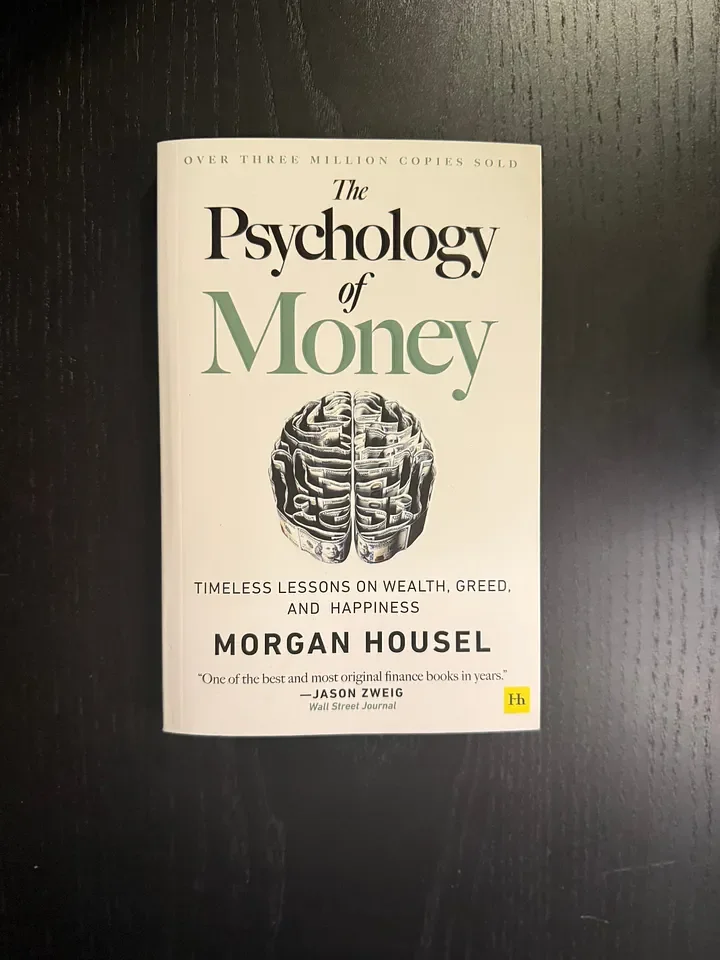
Ah yes this book here gave so many gems when it came to perspectives around finances. But below is what I would have to say would be my top 5 takeaways from this book.
#5 Takeaway
Throughout The Psychology of Money but several times in chapter 5 and 13, Morgan talks about how the margin of safety also known as room for error or redundancy is what he describes as, and I quote, “one of the most underappreciated forces in finance”.
That intrigued me as this soon became one of my takeaways because he says that what this margin of safety look like is anything that allows you to still feel happy no matter the range of outcomes. This can come in numerous different ways such as a roomy timeline, a well structured budget, flexible thinking, or having a solid understanding of what you can comfortably handle emotionally in terms of loss.
The reason why this is so is because he says that the world is governed by odds and not certainties, going back to how he discussed in his book of how much luck and risk plays a role in investing and building wealth. He says it's so under appreciated and underestimated despite how much it has to do with managing money.
Overall what I got from this is that when you have plenty of wiggle room that allows for a failure here or there, that's the best space that you can be in. You're not so hungry for a win that you would become too risky and you can play the game as comfortably as you like as you know that there is plenty of space to make up for any mistakes or failures as you know where your limits are. I think it emphasizes the point with investing that it's not a get quick rich scheme. Many people want fast money immediately and that's not what this is. To build stable wealth, you have to be patient and create an environment for that life to happen.
#4 Takeaway
Now this takeaway was one that had to do with finances but I found it more universal than that. In chapter 5 of the Psychology of Money, Morgan says this and I quote "A mindset that can be paranoid and optimistic at the same time is hard to maintain, because seeing things as black or white takes less effort than accepting nuance".
Reading this statement made me pause. I'm a shades of gray thinker and pretty much always have been. I've always wondered why when I met people who were more black and white thinkers of why they stuck to that view so much. But when Morgan said this is makes sense. Seeing things as black or white takes less effort. It's simple and straight to the point. But when you begin to accept the amount of nuance and variables that affects how things are, things aren't simple anymore thus making it harder to make a straight and fast decision about things.
Our brains like the path of least resistance in general so many people are going to lean more in that direction. But I believe when you do start looking at things of shades of gray and looking at the nuance of things you not only will see how more complicated things are but the beauty in it as well. You're able to give more grace to people and withhold judgement.
Life is not simple and cookie cutter. And I think when you start to accept the complications of it you are in turn are able to make more effective decisions, not just with your finances but in everything. Does it all take more energy? Yes. It absolutely can. But I think it's more fair to live that way because there are very few things in life that are simple. If humans were simple, we wouldn't have psychology and sociology as massive sciences as they are today.
But back to what I'm saying is that seeing things as shades of gray allows for imperfection.
It allows for failure.
And it allows for growth.
So if you are more of a black and white thinker, I want to challenge you on examining why you have that mindset. How do you feel that it helps you? And how do you feel that it hinders you?
#3 Takeaway
I'm not sure of why I never thought about this way but I had a lightbulb moment reading how Morgan explained this in chapter 7 of The Psychology of Money. He says and I quote, “The highest form of wealth is the ability to wake up every morning and say, I can do whatever I want today.”
Having that type of freedom is priceless. To not worry about money and just do whatever you feel like doing is a freedom that so many of us want. We want that joy and happiness of feeling like we have full control of our lives to do whatever we want, whenever we want, with whoever we want for as long as we want to.
Morgan says that this is even considered a dependable predictor of positive wellbeing than anything else out there. That you may think buying luxury things is what can make you happy but if you used that money to buy services that save you time, that is true luxury to get your time back. We want to do things that we enjoy, not that we hate.
And I learned from this book that psychologists actually have a word for it called reactance. Doing something you hate because you have to or even doing something you love on a tight schedule can bring about feelings of reactance where you feel that your freedom is being limited and restricted. It makes me think that that's why so many people felt resistant to the mass call back into the office after the pandemic because they felt like the freedom that they had in working remotely was being taken away.
But back to the book, Morgan just explains in this chapter that the best thing to do with our money is to use it to find ways to get more control over our time. What can give us time back? What can give us more options and choice? So that's something to consider before spending money on another item that just sits in the closet. Will it buy you the freedom you want in life?
#2 Takeaway
What's the difference between being wealthy and being rich? Morgan talks about this in chapter 9 of The Psychology of Money. He explains that wealth is what you don't see as it's income that you haven't spent.
I like how he further explains this as it's like a person that's a millionaire. You can't be a millionaire if you've spent one million dollars. You'll just end up having one million dollars worth of stuff and experiences and then not be a millionaire anymore. Funny enough, usually people will look at that person that spent a million dollars as rich. You can spot who's rich because they usually spend their funds that makes it more noticeable. The rich are spending their current income that they have.
But wealthy people are harder to find to get advice from because their financial success isn't on display as much as it would be for someone who is rich. He goes on to talk about how there's so many wealthy people who look modest in how they live while there's rich people have lavish things but barely making it.
I could kind of see what Morgan was saying with this. I don't think it's completely black and white as there's some people who are wealthy that have nice homes but may not be over the top in the home they purchase. You could say that's modest but who defines modesty when it comes to wealth and spending money? I think it's a bit of gray area when it comes to that.
However I do completely get what he's saying when it comes to true wealth is your income not spent. Like how much of a safety net have you built for yourself despite all those nice things that you may have? How well is your money working for you? It made me think of how much I'd want to build wealth that can take care of me and the goals I've set for myself.
And don't get me wrong, I don't think it's ever a bad thing to spend money on what you want if you have it. But I do think it's one of those things where your priorities has to be straight and that you're not sacrificing long term goals for short term pleasures. All that to say that I think Morgan was on to something as he discusses why we shouldn't go off of outward appearances of who we should follow in terms of financial goals.
My #1 Takeaway from the Psychology of Money
This was my favorite breakdown and reality check that I read in The Psychology of Money. It comes from chapter 10 were Morgan breaks down how we spend our money. First there's the basics - food, water, shelter that type of thing. Then beyond that are there are another level of comfortable basics. To me that's like having a good mattress so that you can get good sleep or a decent consistently working fridge that can keep your food cold. That kind of thing.
Then there's another level of basics that are not only comfortable but it's also entertaining and enlightening. So I'd like to think of this as having Netflix or an air fryer. To me it's something that you don’t "need" necessarily but it is something that makes life a little easier, comfortable and enjoyable because yes throwing my veggies in my air fryer for them to come out perfectly crispy in just a few minutes is enjoyable for me.
But Morgan goes on to say that spending beyond that is where your ego starts to play a role as your motivation behind your purchases may begin to show people that you have or had money. He says this as he's pointing out that many people say that they don't have money to save when really they do. They just have overwhelmingly labeled things as needs when they are more of wants.
If you want to increase your savings, he says it doesn't mean you need more income but rather you need more humility. You have to desire less and care less about how people see you to keep more of your money in your account. And this is his point as to why money is so rooted in psychology because of our motivations behind spending.
Now again this was interesting to me because I can see some truth in this. I think that our desires can get out of control to where we spend more than we should. I'm super guilty of that. I can also see how ego can play a role too in spending. We may not all want to admit it but I'm sure all of us are guilty of a purchase here or there that we made solely because it's the trend or style or attractive name brand.
However again this is a shades of gray thing to me and not all the way black and white. I think some of our purchasing can come from healing our inner child. Things that we wanted growing up that our families couldn't afford so it could play a huge role in it. So I think ego can be a primary reason but I think that there could be smaller reasons as well as to why people may spend beyond it.
I do want to remind you that he isn't talking about people in poverty. He highlights in his book that his comments are about people that spend beyond a low level of materialism meaning people who can already afford the comfortable basics pretty well and going over and beyond that. So my takeaway here is examining the why behind my spending. Why do I feel I need this or want this? Really taking a clearer look at my own desire levels and having an honest moment with myself that of how those purchases is actually pushing back my long term financial goals. We don't like to think of those type of consequences but forcing myself to literally look at the numbers of how this purchase has now made it to where I can't hit this savings mark by this date could be the motivation needed to stay disciplined with my spending.
Those were my takeaways, so please share me yours! If you’ve read the book, please share what takeaways you had from it. If you haven’t read the book yet, tell me your thoughts about the takeaways that I’ve posted. (And check out my review to help you decide if this is truly the book for you.) I hope this has encouraged you to read the book if you haven't or that you've enjoyed hearing my take on it if you have. Take care and happy reading!
