How I Overcame My Fear of Public Speaking (and You Can Too!)
My second time facilitating, I froze. Sweating, voice cracking, the works. Now I can speak in front of anyone, and I’m sharing exactly how I got here.
And then…
*Blank*
My eyes widened. My heart was pounding so hard I thought it might burst through my chest and run away, leaving me frozen in place. Which, honestly, I would’ve been fine with in that moment. Just take me on up to glory, Lord, because I had completely lost my train of thought.
I forced a nervous smile.
“One second, I seem to have lost my place,” I meekly muttered as I shuffled over to my open facilitator binder.
The room felt so awkwardly silent. I didn’t dare look anyone in the eye as I searched for my place in my notes.
Found it.
Cleared my throat.
“The mo-MENT—”
My voice cracked.
Oh no.
If they couldn’t tell before, they could definitely tell just how nervous I was now.
A bead of cold sweat slid down my back. My blazer did its one job for the day which was to hide the sweat.
Meanwhile, my mind was in sheer panic. Every thought was screaming at me.
Why are you so nervous? Calm down! Oh my God, this is so embarrassing. Why can’t my voice stop shaking? What will Allison think?
You see, I had just been converted from intern to full-time employee. It was my first corporate role, and I was so excited to finally be stepping into my true career choice.
But my Director, Allison, surprised me when she mentioned at a team meeting that everyone had to pitch in to facilitate classes.
That included me, the introverted newbie who thought I was safe behind my laptop only doing instructional design work.
My heart sank into the pit of my stomach.
My co-workers were facilitation pros. I never saw them break a sweat or stumble over words. It was always so effortless watching them speak.
But now Allison wanted me in front of everybody.
I could already imagine the thoughts running through people’s minds:
Who is this girl? Why is she teaching this? Where’s the REAL facilitator? This is a waste of time. How’d she even get this job? Is she sweating? Eww!
I stumbled my way through the rest of that course and wanted to crawl under the nearest desk until it was time to go home.
But deep down, I knew that this problem wasn’t going to go away. Ignoring this issue wasn’t an option. If I wanted to grow in this role, I had to learn how to do it well.
I later learned that public speaking is the number one fear people have. Number two? Death.
Which makes sense, because in that moment, I would’ve preferred to be sipping a glass of wine with Jesus on a comfy cloud couch in heaven than to be standing there sweating in front of a classroom again.
So, I got to work. Here’s what helped me feel more relaxed with the thought and process of speaking in front of others.
1. I Asked for Help from the Best
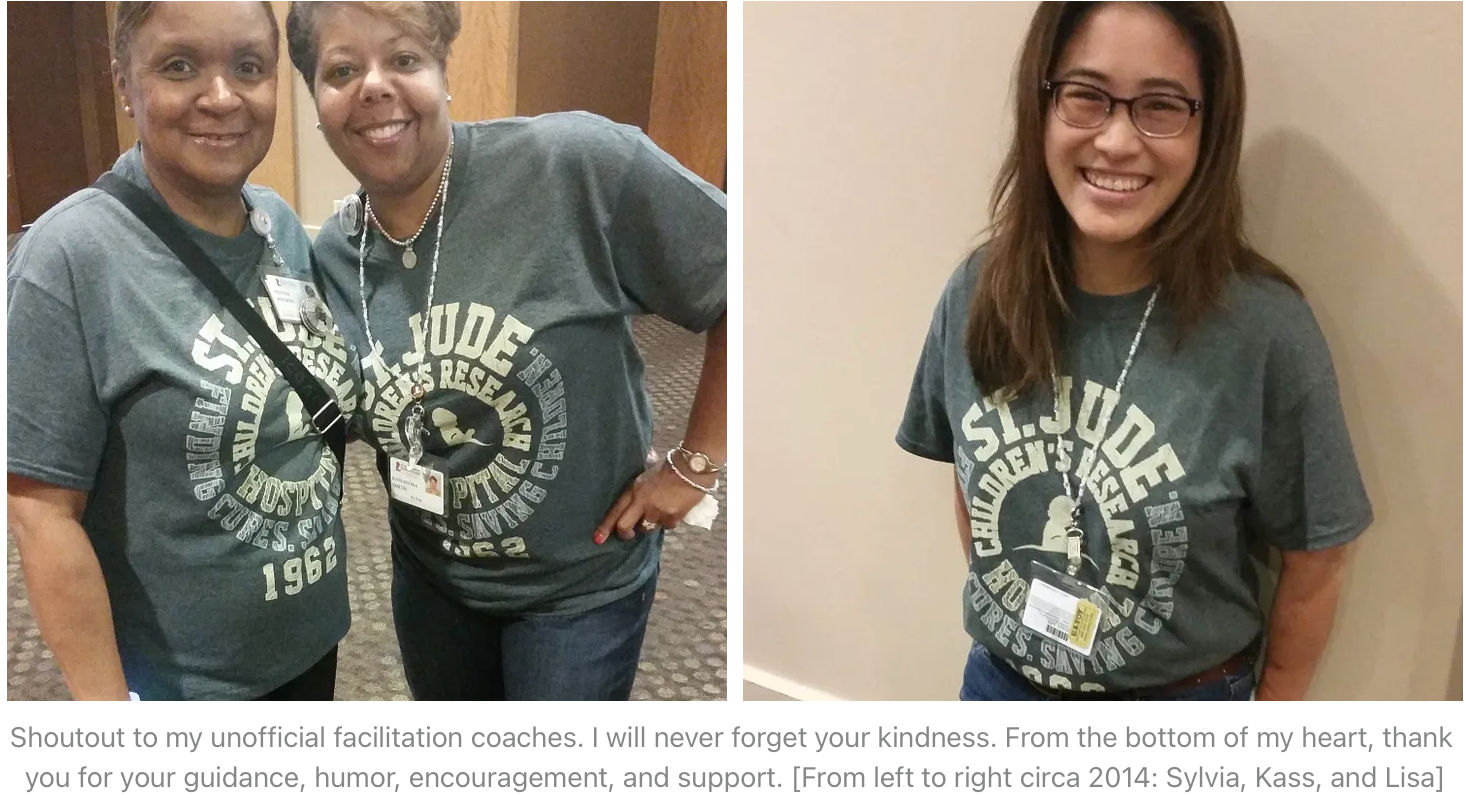
Luckily, I didn’t have to look far. Two of my co-workers, Kassandra and Sylvia, were experts at public speaking in my eyes.
Kassandra was radiant and fun with an infectious giggle and a warm smile. She kept the room light, redirected participants gently, and never harmed the psychological safety in the space.
Sylvia, a newer co-worker with a solid teaching background, made every class feel at ease and welcoming. In her presence, you’d unconsciously feel comfortable engaging and asking questions. She just brought that type of calm to the room.
I asked them to sit in on my next course and give me feedback. Kass could, but Sylvia had a conflict. Still, Sylvia comforted and encouraged me before promising to join the next one.
When my next class ended, Kass came over beaming in pride of me.
“You did so well, puddin’ pop,” she said. “I could tell you were nervous, which is normal, but you’ve got to keep going. With practice, you’ll get more comfortable.”
She went on to tell me that being nervous is just part of it. She admitted that even she feels nervous at times, especially when she’s facilitating something new.
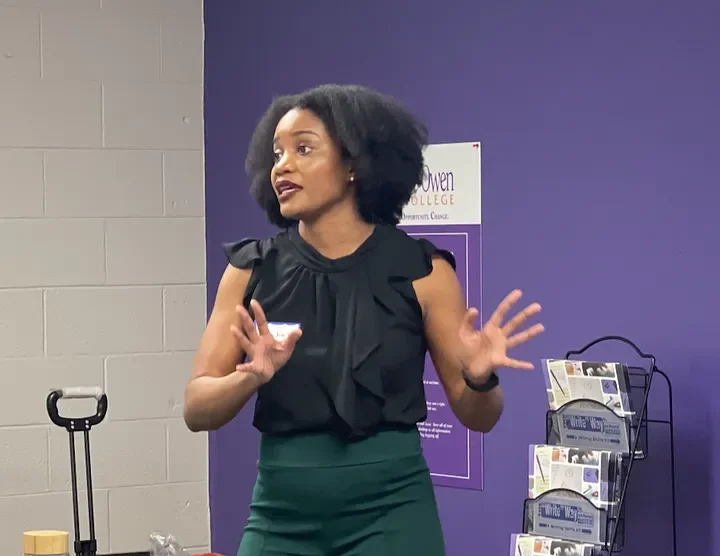
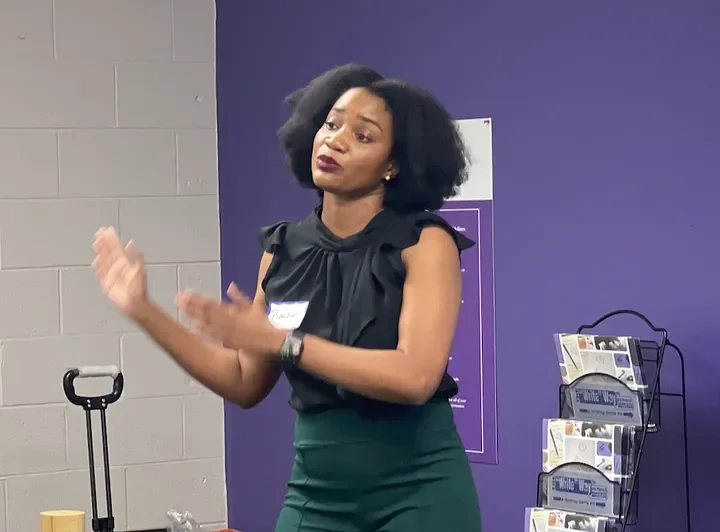
Then she added, “I will advise you to stop directing the choir, though.”
I gave her a confused look. She mimicked me waving my arms.
“You talk with your hands as if you’re a choir director,” she chuckled. “While you can talk with your hands, overdoing it can become distracting to your participants. So try to do less of that.”
I laughed at her imitation of me, but it was an eye-opening moment because I never even noticed that! Getting that feedback about my blindspot that I never would have noticed of myself was so helpful. From that day forward, I became more intentional about my gestures, using them more for emphasis and transitioning instead of every statement.
2. I Made Feedback a Habit
Many people ask for feedback once and then never again especially if the advice they received stung. But I knew I couldn’t do that.
I wanted to improve, so I made feedback a regular request.
Sylvia sat in when she could and gave recommendations. Lisa, another new co-worker that came along, would split classes with me so I could observe her style and feel less pressure to facilitate an entire class on my own.
I received so much valuable feedback from all 3 of these ladies such as how often I moved around the room, to where I placed my hands, to pausing without apologizing. Having such clear and concise feedback made a huge difference and I made a point to ask for it frequently!
3. I Asked for Help from My Director
It was nerve-wracking to admit my struggle, but I fessed up to Allison about my nerves. I assured her that despite my fear, I was ready to do whatever I could to improve.
To help me get more comfortable, she sent me to a facilitation course with the Bob Pike Group, a company known for teaching facilitators how to lead a course with confidence.
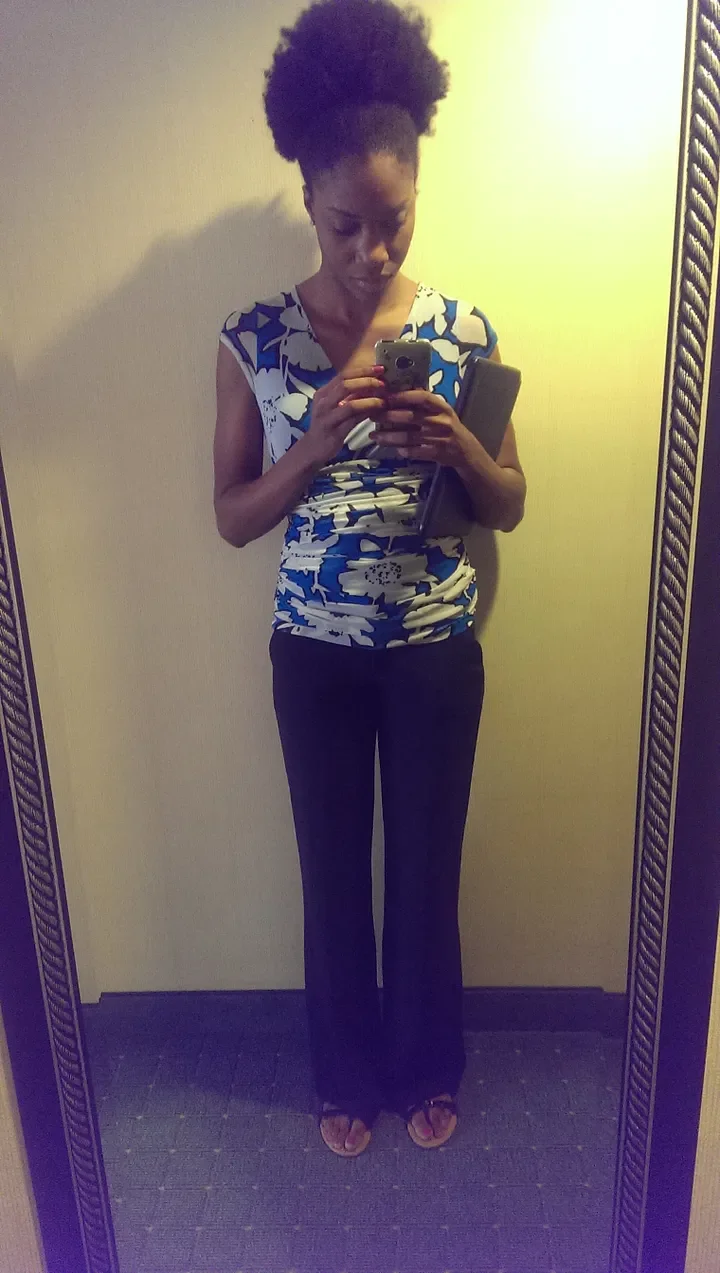
I walked into a room of 20 professionals from different industries, determined to learn everything I could. I was the youngest one there, and even though I had accidentally packed casual sandals instead of dress shoes (see photo below), I wanted to earn the respect of my peers as someone taking this course seriously.
I took pages of notes, asked plenty of questions, practiced the techniques, and left feeling more confident.
It dawned on me that building this skill wasn’t impossible. It was just new.

4. I Practiced Everywhere I Could
An old piece of advice from a college mentor came back to me: take every opportunity to speak in front of others, no matter how small.
In fact, small opportunities were the best because they helped me gradually increase my skill in low-pressure environments.
At work that meant volunteering to help facilitate courses and speaking up in team meetings. I even worked on projecting my voice by asking a hard-of-hearing colleague to sit across the room and tell me if she could hear me clearly when I spoke up.
That was a huge help to me, as speaking up was a struggle in itself.
Over time, repetition made the content second nature, and I could focus on connecting with my audience by adding humor, smiling, and relaxing into the role.
I was starting to bring more of me to the class, which made me feel more authentic and helped lower the intensity of my nerves.
5. I Read About It
Oh, you knew this was coming! Of course, books are part of this journey.
My favorite book that helped me? The Credibility Code by Cara Alter. It’s short, practical, and full of advice on speaking in a way that earns trust.
I used her tips and bonus exercises to fine-tune my delivery. That’s why I had to write about my biggest takeaways and overall book review for that book. I’m so grateful for everything I learned from it.
Where I Am Now
These days, when I’m asked to facilitate, I no longer feel any feeling of dread or fear.
It’s an opportunity to engage with others, reinforce my professional brand, and help my participants to learn something new. Now do I still get nervous? Absolutely.
The beads of sweat still sprint down my back rather frequently, but now I know how to work with my body’s nervous habits instead of trying to fight against them. (I also have started to swap the blazer for a dark-colored shirt instead.)
And I’m grateful I didn’t talk myself out of learning this skill. I could’ve stayed “safe” as just an instructional designer, but I would’ve missed out on so many opportunities and the confidence that came with them.
The Takeaway
If you’ve been asked to speak and feel like you’d rather pick out your casket to get ready for the grave, here are my suggestions:
Don’t get in your own way. Accept the challenge and believe in yourself. Watch that self-talk to keep it positive.
Ask for help from people who are great at it. Remember, the worst they can say is no. These are the best people to ask feedback from because their expertise guides them to know exactly what to look for in giving you feedback.
Seek and accept feedback regularly, even if it stings. Say “ouch” in your brain, then lock in. Remember that feedback is a gift, but it’s up to you to unwrap it and apply it.
Practice, practice, practice. Whatever low-stakes situations are around you, take advantage of them. Never shy away from opportunities to practice.
Before you know it, you’ll master the skill you thought you’d never conquer. And you’ll look back, just like I do now, and be so glad you didn’t give up on yourself.