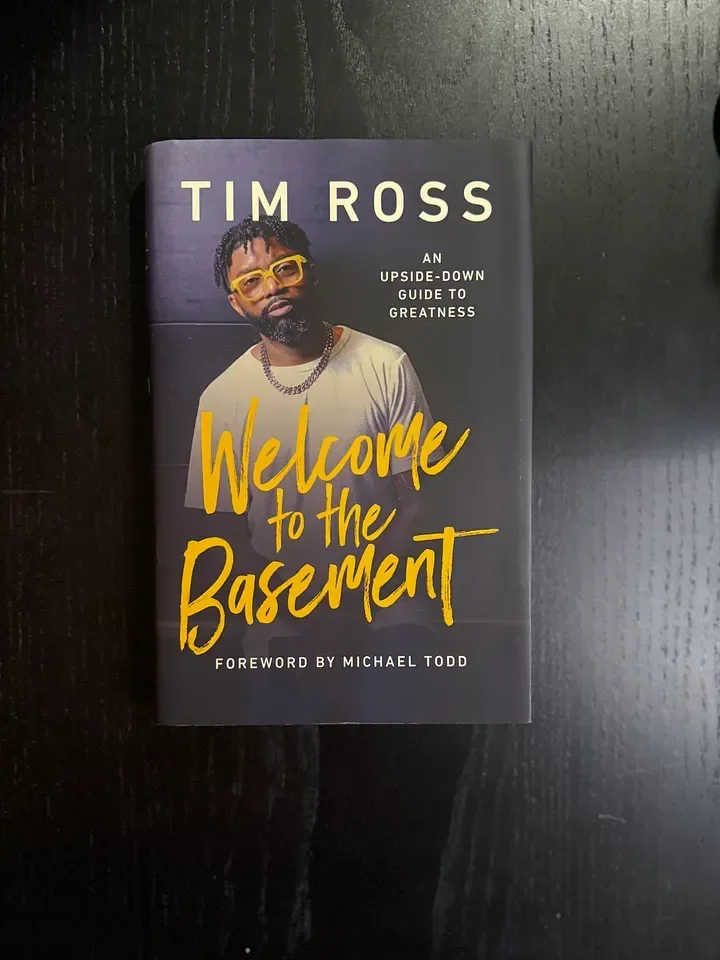
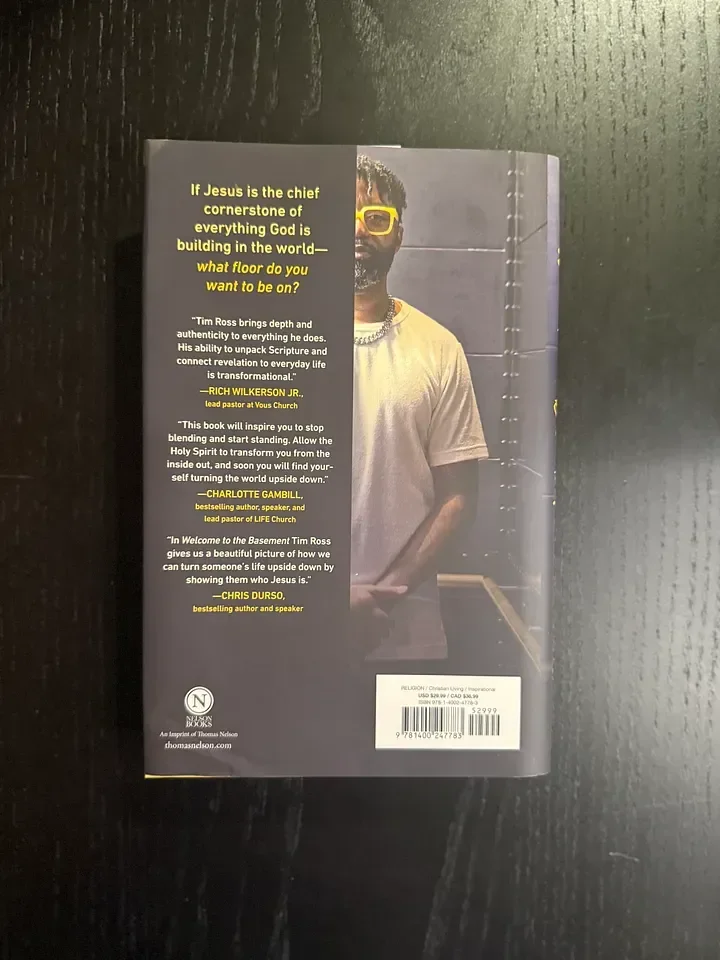
My Top 5 Takeaways from Welcome to the Basement by Tim Ross
Oh my goodness this was such a great book. In this post, I'll share what I've determined to be my top 5 takeaways from the 22 chapters that I read and how I plan to apply what I learned moving forward. I also have two bonus highlights just because it had me so tickled when I read it so hang tight for those as well.
#5 Takeaway
Early on in Ch. 3, Tim takes the time to really describe what God's love is for us and cautions us to not live life with a negative fear of God. Many of us Christians have heard of having fear in reverence of God to honor Him. But what Tim is referring to is fear fear, that if you make the smallest mistake, God is ready to strike you down and that's simply not how God's love is set up.
This resonated with me because I feel like I struggled with this early in my Christian walk. I really did feel as if God was waiting to see if I was going to sin and as soon as I did, all of hell fire will come raining down in my life and I'd have to beg for mercy. The problem with this is that it really gets in the way of us having relationship with God because we're so paranoid of if we're righteous enough just to talk to him. Prayer is simply a conversation. So I had to learn to change my perspective of God into a gracious Father that loves us, wants a relationship with us, and although He will nudge us back in line when we get off of it, He's there to comfort and be with us through all our peaks and valleys.
So the reminder from this is to just give ourselves grace in the same manner that God gives it to us because many times in my opinion we're just being caught up in perfectionist tendencies and we have to admit and recognize that we're human. We're going to mess up. Just don't run from God when it happens. Stay close. Keep praying. And if you're struggling that much with a certain sin, just ask God to help you with it, and He will.
#4 Takeaway
Tim goes on in chapters 6 and 7 to talk about how much God hates religious practices that are there just for the sake of religious practices. What I mean is that it's practices that doesn't truly have a focus on honoring God of having your heart truly in it, but merely just doing it for show or because of routine. So it's like going to church every Sunday but you skip the worship, get there just in time for the pastor, half way pay attention and then dip out before prayer so that you can avoid parking lot traffic. Or it's like reading prayers out loud but you're really thinking about what you're going to have for lunch later. Or it’s opening the Bible app to maybe read half of the verse of the day and then closing it only so that your streak won't break. Things like that you're just doing it out of routine but not because your heart is truly in it to meet with God. And that's where Tim is talking about how that's operating out of a religious spirit.
So to put this in practice, it's really about intentionality. Where I've struggled with the most in the past in making sure I went to bed on time so that I could get up and have the time to pray and read my bible when the day began. I've made it a rule to get out of my bed and go to a different room when I pray or else I know I'm just going to somehow someway fall asleep midprayer.
I've also made it a rule that I can't get on social media or do other activities on my phone until I've spent time in prayer. Sometimes I get behind and have to do what I call a drive by prayer (praying on the way to work), but I no longer feel satisfied with that. Cause when you drive and pray, you have to juggle praying with exercising patience and caution with the drivers around me and many times that doesn't quite mix and I won't go any further in explaining how lol
I feel that I've gotten a lot better in that but there's times that I do fall off. Again it's one of those things where you just got to give yourself grace, ask God to help you, and get back in line. Honestly I think the only reason I've gotten this consistent with my prayer time is because I literally put at the top of my prayer list to pray that God helps me be consistent in my prayer time. So like I said earlier don't be ashamed of asking God to help you because He will.
#3 Takeaway
A comparison that I really liked was one that Tim shared in chapter 13. He gives a comparison about how we should act like we're filled with the Holy Spirit which comes from actual scripture that reads "Don't be drunk with wine, because that will ruin your life. Instead, be filled with the Holy Spirit." Ephesians 5:18. Tim cautions that too much alcohol has the type of the affect on you that can be counterfeit to what the Holy Spirit does. Being drunk alters how you act and what you say and you have a lot of courage in those moments to say those things. And that's why that comparison was made, that we should act as if we are "drunk" or filled with the Holy Spirit. That He is so strong in our lives that our behavior and what we say changes and that we have the courage to say the things that God wants us to say.
Now as someone who is aware of what being wine drunk is like from experience, this was an interesting comparison to me. Because too much alcohol of any kind really changes how you act, what you say, and what you have the boldness to say than from when you're sober. So my application really was more of deep reflection as I began to think about what does my behavior say about me. Am I echoing the behaviors and words that God would want me to have? Have I not been challenging myself to see how can I improve?
And it's uncomfortable to think about honestly because you know in our mind we think about how we're a good person already, and we don't want to part with certain habits that bring us joy. But if I really want to strengthen my relationship with God, I have to objectively and honestly reflect on those things. So it is in my prayers that God helps me through this to shine a light on those things and not only help me to change those behaviors but to even help me with the desire to change them as well. Because at the end of the day I don't want to feel as if I'm telling God that my enjoyment and entertainment is more important than the love I have for Him.
#2 Takeaway
Tim is talking in chapter 19 of the story of Zacchaeus. And what stood out to me is him cautioning that you do not find your identity in your success as many of times when we do that, it's actually covering up rejection. That in actuality we need to find our identity in Christ.
For me this is significant, because like most human beings, I have experienced rejection before as well. And I know that there were periods of my life where I threw myself into my work or in volunteer work because I was seeking to feel better about those other areas of my life where I felt put down. This is dangerous because there will never be enough to heal that pain. You will keep seeking and seeking and seeking until you burn yourself out. So there's so much more value in truly taking the time to heal, analyzing the pain, what caused it, how to reframe your perspective of it, give it to God and truly believe the Word of God and everything that it says about who God has called you to be.
That takes work. That takes time. It's not easy and I think that we want things to happen instantly. We want faster gratification. In my case, I had to study about self talk as God showed me that that was my struggle. I was constantly putting down myself without even realizing it and then go try to fill my plate with doing everything under the sun to feel successful and feel better. It was toxic. It wasn't until I saw how harmful my words were being that I finally started to break free from it. So switching to speaking the negative to the positive of who I am in Christ did wonders in shifting my mindset. It takes time but once it gets rooted in you, it becomes a very freeing feeling.
My #1 Takeaway from Welcome to the Basement
Finally my #1 takeaway comes from chapters 18 and 22 but really almost throughout the book. Tim does a great job of emphasizing something that I would get on my soapbox about all the time. That is that we need to revise our approach on how to witness to others.
If you want to witness to someone, play the long game. Take time to get to know them, and build a connection with them while praying for them and ask God to create the opportunity at his timing of when to speak into their life. Too many times I've seen Christians that will beat people over the head with the bible of how that person should stop sinning so that they don’t go to hell, and they literally just met them 2 minutes ago.
Like.
Can we use common sense a bit?
You can't bully someone into becoming a Christian. That's not how this works.
So I love that Tim talks a lot of how to witness to people in love. To talk to people, get to know people, and wait on God's timing of when to share what God wants you to share. The whole time you could be praying for them and honestly the whole time you should be praying for yourself as well that you have the patience to wait on God to hear when its time to speak about a topic related to Christ. So throughout the book especially as you get closer to the ending, you see Tim mention this quite a bit of how you don't have to preach a sermon every time you see that person.
So many Christians have the worst influencing skills and feel righteous from doing it and it makes my soul itch. I was just glad that Tim and I share similar sentiments in this. But this has reminded me to pray more for people asking God to help me to hear Him clearly when it's time for me to speak about faith and be more conscious about how I'm representing Christ day to day with my words and my actions.
Alright those are my top 5 takeaways but let me you something, this book had me cracking up. If you listen to Tim's podcast, he has a pretty good sense of humor. I thought it was funny how he went in for a second of how annoying it sounds to hear a prayer where the person says Father God 50 million times. Like if I was God, I would get annoyed too. Imaging being in a conversation with someone and they say your name at the beginning and end of every sentence. Like who started that practice and for why. I just need to know!
Also it was funny because he talks about how Jesus died on the cross for us off of a maybe, that MAYBE we might follow him. That it's not a guarantee because we all have free will to choose as human beings. But if it was Tim, Tim wouldn't be going. If Tim died on the cross, he'd come haunt every day to remind us what he did on some “do you not see these holes in my hands and you still not choosing me” aggression. I couldn't imagine Jesus stalking us on saying “you not finna ignore me after all I did for you”! So yea when I tell you that you will get some good laughs as well out of this book, you will. It's a joy to read. I do recommend it.
Alright those are my takeaways. What were your takeaways? If you’ve read the book, please share what takeaways you had from it. If you haven’t read the book yet, tell me your thoughts about the takeaways that I’ve posted. (And check out my review to help you decide if this is truly the book for you.) I hope this has encouraged you to read the book if you haven't or that you've enjoyed hearing my take on it if you have. Take care and happy reading!
