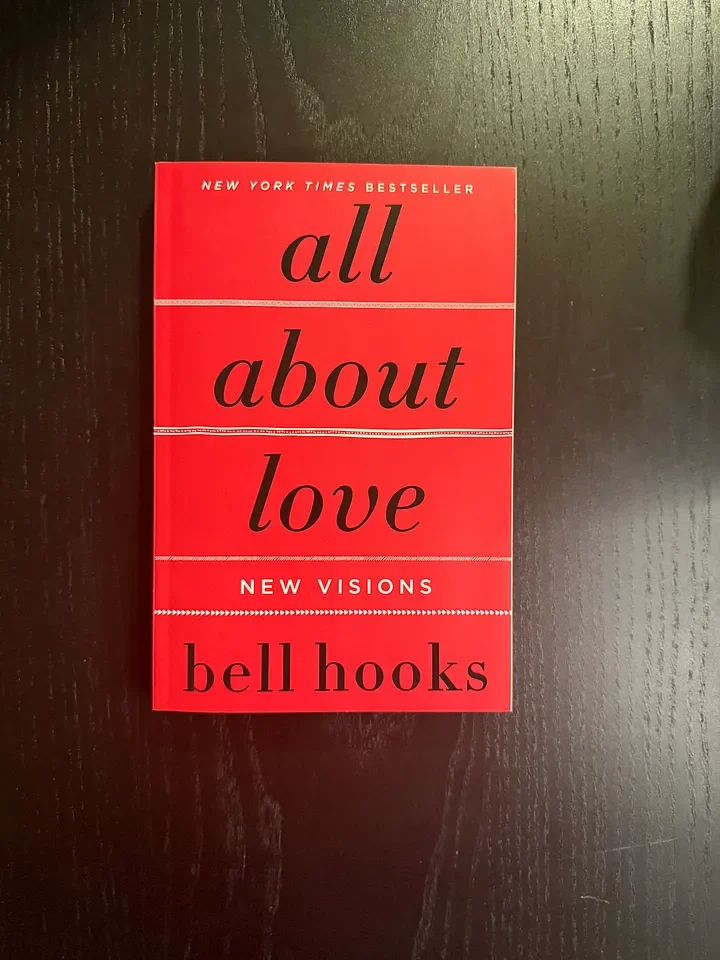
My Top 5 Takeaways from All About Love by bell hooks
This book was challenged my perspective and has made me even more curious of all of bell hooks’ work. I’m definitely adding it to my reading list to explore more, but for now I figured I could share with you what I feel were my biggest takeaways from the book, All About Love. If they resonate with you, then *hint hint* you should probably read the book! Let’s begin!
#5 Takeaway
This was an interesting takeaway that I read from Ch. 4 and it wasn't even written specifically from bell hooks. Bell alludes to the words of Gloria Steinman's book titled Revolution from Within. In it discusses how dangerous it is for a woman to reach success without doing the self work to establish a strong foundation of self-love and self-esteem. She warns that if we don’t do this, women will struggle along the way in her success. I would have to agree to this and wonder if it's even limited to a gender. Our insecurities can be our biggest enemy with whatever goal you may choose for yourself. Right now in our society, it isn't really taught to do the groundwork early on to ensure you’re in a good mental space. Therapy has only recently become more accepted (and in the black community it’s still relatively shunned).
Really focusing on your mental health and where you are as in your perspective of yourself, knowing who you, and embracing who you are would be an amazing next step for us to instill in teens going into young adult age. I would even say that the longer you put off establishing healthy self-love and self-esteem, the more likely that you may miss or destroy great opportunities that could get you to success faster.
So how do you combat this? Start working on your mental health. Get a therapist. Pray. Reflect. Get feedback from people who know you and love you that could help you best see yourself, the good, the bad, and the ugly. And make baby steps in adjusting your words, thoughts, and actions towards yourself each and every day to be more positive. Because that work is a wise investment into your future.
For me, I’ve been doing my best in keeping this going. I made a decision in 2020 that I was going to stick to my therapy sessions no matter what just to make sure I didn’t leave any stone unturned. I now see my therapist once a month as a check up but I’ve seen so much growth in my mental and emotional health by doing that. I told myself that this is an investment in not only my future family that I’d like to have one day to be be the best healed version of myself as a wife and mother, but even if that family doesn’t happen, at least I’m the best healed version of myself as I walk in my career, for my friendships, and for my purpose. I pray for my therapist that God leads and guides her in her recommendations. I also try to get feedback from people that I care about regarding how I handled certain conversations and situations. This is how you grow and I’m so happy I committed to doing that.
#4 Takeaway
You know how people say that nothing changes overnight? Well bell disagrees. She talks about in Ch.9 that if you want to improve your relationship overnight, all you have to do is put the interest of your partner at the same level of your own interests. She goes on to discuss how this can help improve any other human connection as well to put an effort in recognizing when the person needs our attention and giving generously to them. She believes people underestimate how powerful attention is in a relationship, friendship, or any connection you have. Now no one says this is easy, but I think anyone could begin with just finding out what are small acts of kindness or words that you can do to make their day and begin to do them on a regular basis. And if you don't know what that could be, ask! Believe it or not, you don't have to be a mind reader! Once you know, prioritize it. You may have to put it on your calendar or put a reminder on your phone at first to remember but after a while of consistently doing it, it'll turn into a habit. A habit that will bring joy and value in your relationships.
So don’t tell my circle, but I’m dabbling in a baby step of doing this in a very structured way. I actually mark a date on my calendar once a month to reach out to people in my circle just to check on them. You never know what people are silently going through so doing this without asking for anything in return has led to some great conversations and moments that I got to bond with people that I truly cared about. But remember, I don’t rely on my memory to do this. I put it on my calendar because nothing happens for real if it’s not on my calendar.
#3 Takeaway
I love this moment in Ch. 8 of All About Love when bell hooks talks about the importance of your friendship with others in relation to having a healthy romantic relationship. She explains that you learn to mutually love from friendships and that creates a positive foundation for all your human connections. Your friendships also teach you what you will and will not tolerate, because if you won't tolerate an emotionally or physically abusive friendship, then you should use that same rationale in a romantic relationship. Our friendships overall teaches us a lot about connecting with others so we need that learning experience. We need that community of friends even once we have began to have romantic relationships because if you don't, you will eventually feel an emptiness from it even if you have a solid relationship. That's why she warns that you're at risk of having a codependent romantic relationship when you give your exclusive attention by cutting your friendship ties.
Her talking about this was really interesting to me because I've seen this play out with people before of how they prioritize friendships and relationships. Because to give them grace, it's not easy to balance life and depending on how you were raised too, you may have misconceptions about having a healthy balance when it comes to the people in your life. You can't lose yourself in your role as someone's partner. It's okay to have hobbies, it's okay to have interests, and it's okay to have your own set of friends. You're not being selfish by doing so. But it takes effort and time to learn how to balance it all so that you can still have a healthy romantic relationship.
So how I interpreted this from bell is that, no one is expecting you to be perfect, but make sure you're putting an effort in nurturing your community of friends and yourself with self care as much as you are your relationship. This takeaway just further reiterated the why behind my scheduled touch points. I really want to be intentional about keeping my friendships healthy and thriving.
#2 Takeaway
Have you ever been accused of nagging? Have you ever accused someone else of nagging? You may want to reconsider of doing that. In Ch. 9 of All About Love, bell hooks talks about how women in particular are frequently accused of nagging when they communicate from a place of pain. It's a gift for someone to give you feedback and if they feel compelled to give you the same feedback over and over again, many women have expressed that they feel emotionally beaten down when their partner doesn't want to listen or talk. What's worse is that labeling the action instead of partnering together to solve the issue will end up undermining that woman's self-esteem especially those that carry a childhood wound that if they expressed hurt, they were shamed or humiliated.
So it's important to check yourself first. Why do you want to label this person's action as nagging? Have you done anything to address the issue? Did the way you address the issue completely solve the problem or maybe you need to adjust your approach? Talk it over with your person to see how the issue can be fixed and come up with a solution that you both can agree on instead.
My #1 Takeaway from All About Love
Is caring for someone the same thing as loving someone? Bell says it isn't. She talks about this in chapters 1 and 2 of All About Love saying that when people misunderstand this, they can end up staying in situations that just aren't healthy for us. She says that many children grew up experiencing psychological and physical abuse in their homes from their parents and were told that their parents were still showing love to them and in some cases that the abuse is actually how they express their love.
However the danger in this is that children will grow up to rationalize that when they experience abuse from others that it is just a form of them showing love for us; that it's not that bad or even at times acceptable to expect. She says that yes, your parents may have cared for you, but they weren't showing love in those instances.
Now this was like opening a can of worms to me especially in certain communities when you think about the discourse around spankings and whether or not cussing or talking down to a child being verbal abuse. I'm not sharing this to start a debate as I am not a debate person at all. But what I will say is that it's worth taking a moment to reflect on it when you think about how realistic it is for some people to grow up and end up tolerating abuse whether it's physical, emotional, or mental in their relationships. What is it that is making that seem okay to them?
Now there's plenty of variables that can play a role in this but I think it's worth not immediately reacting to her words and really pondering it from her point of view. Overall bell is sharing that your family or people around you may show a form of giving care to you but that doesn’t mean that what they did was an expression of love so you should not misconstrue it to think that it is love when you experience it from others.
These 5 takeaways have definitely lingered in mind after reading this book even after all this time. What were yours? If you’ve read the book, please share what takeaways you had from it. If you haven’t read the book yet, tell me your thoughts about the takeaways that I’ve posted. (And check out my review to help you decide if this is truly the book for you.)
